Introduction
Tiles are everywhere, from modern kitchens and bathrooms to commercial floors in shopping malls and hotels. Behind every perfectly aligned tile installation is a skilled tradesperson who understands precision, preparation, and professional technique.
If you have ever wondered how to tile professionally or start a career in the construction trades, the Certificate III in Wall and Floor Tiling (CPC31320) qualification turns that interest into a real career. This course teaches you how to prepare surfaces, cut and install accurately waterproof wet areas, and complete the tiling projects that meet Australian construction standards.
This qualification course focuses on real industry skills used on construction sites, combining hands-on training with workplace experience through apprenticeship or practical training at a Registered Training Organisation (RTO).
Over 22400 wall and floor tilers are employed nationwide (November 2025), with 900 new jobs added annually, and 89% in full-time roles averaging 42 hours per week.
Are you ready to learn how to tile walls and floors professionally?
What Certificate III in Wall and Floor Tiling Teaches You
The CPC311320 Certificate III in Wall and Floor Tiling is a nationally recognised qualification that is designed to prepare learners to work in the construction industry as professional tilers.
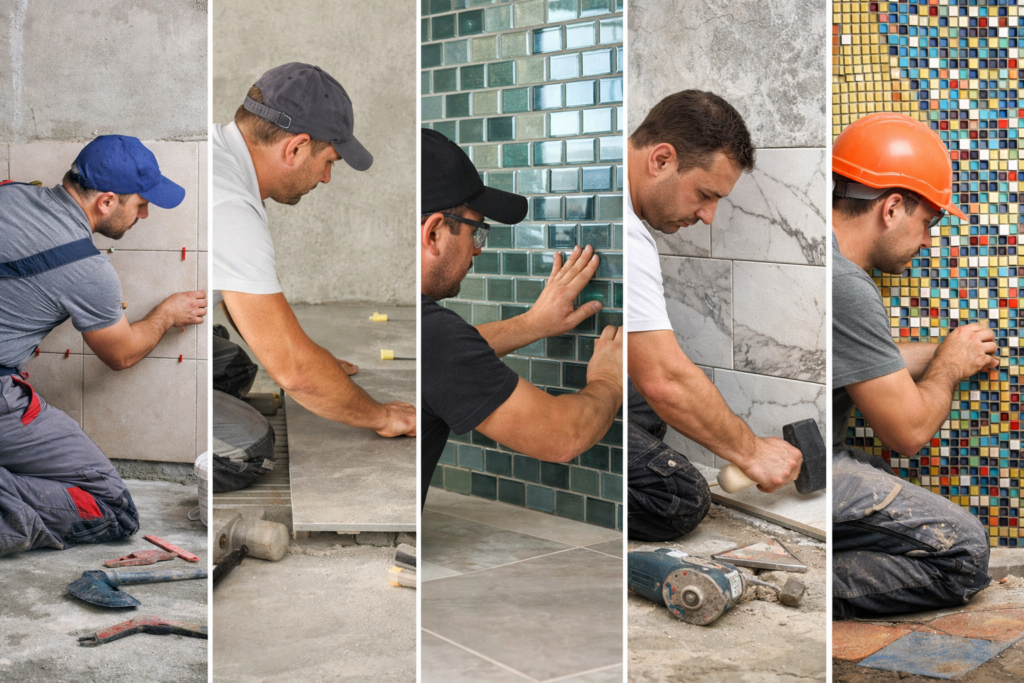
This course teaches the essential skills needed to install wall and floor tiles using a variety of materials, including:
- Ceramic tiles
- Percelian tiles
- Glass tiles
- Marble and stone tiles
- Mosaic tiles
You wil also learn how to safely handle tiling tools and equipment while following the safety regulations.
The core skills you will Learn
The Certificate III in Wall and Floor Tiling covers a wide range of skills, including:
- Surface preparation and levelling: Preparing surfaces for the smooth application of tiles.
- Waterproofing wet areas: Ensuring areas like bathrooms and kitchens are properly waterproofed.
- Measuring and setting out tile layouts: Accurately planning the tile installation to achieve a professional finish.
- Cutting tiles accurately: Mastering the use of tools to cut tiles to the correct shape and size.
- Installing floor and wall tiles: Gaining hands-on experience in laying tiles to a high standard.
- Applying grout and sealants: Ensuring tiles are properly grouted and sealed for durability and appearance.
- Workplace health and safety procedures: Following essential safety protocols to protect yourself and others on the job.
This qualification includes 17 core units
- CPCCWHS2001 – Apply WHS requirements, policies and procedures in the construction industry
- CPCCOM2001 – Read and interpret plans and specifications
- CPCCCM2006 – Apply basic levelling procedures
- CPCCOM1012 – Work effectively and sustainably in the construction industry
- CPCCOM1013 – Plan and organise work
- CPCCOM1014 – Conduct workplace communication
- CPCCOM1015 – Carry out measurements and calculations
- CPCCWF2001 – Handle wall and floor tiling materials
- CPCCWF2002 – Use wall and floor tiling tools and equipment
- CPCCWF3001 – Prepare surfaces for tiling application
- CPCCWF3002 – Install floor tiles
- CPCCWF3003 – Install wall tiles
- CPCCWF3004 – Repair wall and floor tiling
- CPCCWF3005 – Install decorative tiling
- CPCCWF3006 – Install mosaic tiling
- CPCCWF3007 – Tile curved surfaces
- CPCCWF3009 – Apply waterproofing for wall and floor tiling
This qualification includes 3 elective units
- CPCWHS1001 – Prepare to work safely in the construction industry
- BSBESB301 – Investigate business opportunities
- BSBESB407 – Manage finances for new business ventures
How to Tile Like a Professional
Tiling like a professional involves several key steps: surface preparation, layout planning, cutting techniques, and finishing methods. Mastering these techniques will help you achieve durable, high-quality, and visually appealing results.
During the Certificate III in Wall and Floor Tiling, students gain practical experience with essential tiling techniques such as:
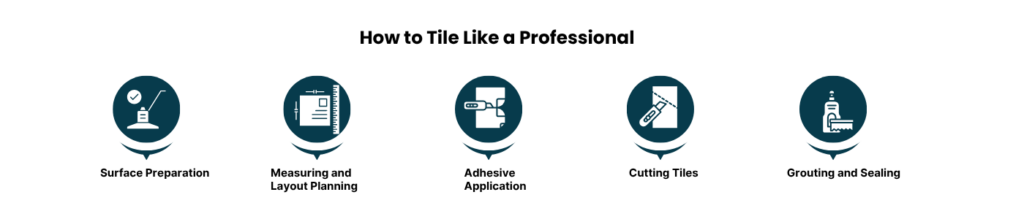
1. Surface Preparation
Before installing tiles, the surface must be clean, dry, level, and structurally sound. Poor surface preparation can lead to uneven tiles and installation failures. It’s essential to remove any bumps, dips, or debris to create a stable foundation for the tiles.
2. Measuring and Layout Planning
Accurate measuring is critical to avoid waste and ensure the tiles are spaced evenly. Professionals often start tiling from the center of the surface to avoid uneven edges. Calculating the number of tiles beforehand helps reduce material loss and ensures an efficient layout.
3. Adhesive Application
Tiles are bonded to the surface using thin-set adhesive. Applying the adhesive with a notched trowel ensures proper coverage and creates a strong bond, which is crucial for a long-lasting installation.
4. Cutting Tiles
Precise cutting is necessary to make tiles fit around fixtures and edges. Professional tilers use wet saws or tile cutters for clean cuts. Remember to measure twice before cutting to ensure accuracy and achieve a seamless finish.
5. Grouting and Sealing
Grouting fills the joints between the tiles, giving them a neat, even appearance. Silicone sealant is applied to corners and wet areas to prevent moisture damage and ensure the tiles are properly sealed.
Step-by-Step Guide on How to Tile a Wall
Tiles are commonly installed on the kitchen and bathroom walls. Here is the simplified overview of the titling process
| Step No | Process | Work |
|---|---|---|
| 1 | Prepare the wall | Remove the dust or grease on the wall, which will affect the tile adhesion. Ensure the wall is clean, dry, and level. |
| 2 | Calculate the tile requirement | Measure the wall and calculate the number of tiles required. Adding 10% extra tiles allows for cuts and mistakes. |
| 3 | Mark the Midline | Mark a vertical centre line to ensure tiles are evenly aligned across the wall. |
| 4 | Apply Primer and Adhesive | Apply primer first, then spread adhesive evenly using a notched trowel. |
| 5 | Lay the Tiles | Start placing the tiles from the centre and move outward. Use a tile spacer to maintain consistent gaps between the two tiles. |
| 6 | Cut Tiles for Edges | Cut tiles carefully to fit corners or edges using a tile cutter. |
| 7 | Apply Grout | Once the adhesive has dried, fill the tile joints with grout and remove excess grout with a sponge. |
| 8 | Finish with Silicone Sealant | Apply mould-resistant silicone sealant to corners and edges to protect against water damage. |
Training Pathways and Apprenticeships
The common pathway to complete the Certificate III in Wall and Floor Tiling is through a tiling apprenticeship. This pathway allows students to gain practical experience while learning the qualification.
Apprenticeship Pathway
A tiling apprenticeship typically takes 3 to 4 years to complete. During an apprenticeship, students develop both technical knowledge and hands-on skills by combining paid employment with structured training.
An apprenticeship usually includes:
- Paid work with a tiling company
- Gain practical skills
- Classroom training with an RTO
Most apprentices attend their training throughout the year by working full-time (around 38–42 hours per week).
Entry Requirements
There are no strict academic prerequisites for enrolling in the Certificate III in Wall and Floor Tiling. The applicants who have completed Year 10 or Year 12 will be preferred by employers.
Before working on construction sites, apprentices must obtain a White Card, which is a mandatory construction safety induction certificate in Australia.
Recognition of Prior Learning (RPL)
Those who already have prior experience in the tiling industry can complete the qualification faster with Recognition of Prior Learning (RPL).
This pathway is particularly useful for:
- Trades assistants
- Experienced tilers without formal qualifications
- Workers transitioning from related construction trades
Career Opportunities in Australia
Completing the Certificate III in Wall and Floor Tiling includes job roles such as:
- Apprentice Tiler: Working under the guidance of a qualified tiler to gain practical experience.
- Qualified Wall and Floor Tiler: Full qualification allowing you to work independently.
- Construction Tradesperson: Working on various construction projects that require tiling expertise.
- Self-employed Tiling Contractor: Running your own tiling business, offering services to residential or commercial clients.
FAQ
In this course, you’ll learn essential tiling skills, including surface preparation, layout planning, adhesive application, cutting techniques, grouting, sealing, and following workplace health and safety procedures. The course equips you with practical, hands-on experience to work as a professional tiler.
No prior experience is required for the Certificate III in Wall and Floor Tiling. This qualification is designed for beginners or those wanting to formalize their existing skills in tiling.
The duration of the course can vary depending on whether you study full-time, part-time, or through an apprenticeship. Typically, it can take around 12-24 months to complete, with practical, hands-on training included.
Yes, many Registered Training Organisations (RTOs) offer blended learning options, allowing you to study some components online while gaining practical experience in a real-world setting.
You’ll need some basic tiling tools such as a trowel, tile cutter, notched trowel, and safety gear like gloves, goggles, and knee pads. Some RTOs provide tools as part of the course, but it’s best to confirm with your training provider.
You will learn how to work with a variety of tile materials, including ceramic tiles, porcelain tiles, glass tiles, marble, stone tiles, and mosaic tiles.
Yes, the course includes hands-on training, often in the form of an apprenticeship or practical training sessions. You’ll be working on real-world tiling projects to apply what you’ve learned in a professional setting.
Yes, after completing your Certificate III in Wall and Floor Tiling, you’ll be qualified to work as a professional tiler. Many students secure full-time positions, while others choose to start their own tiling business.
As a qualified tiler, your salary can vary based on experience and location, but the average wage for tilers in Australia is between $55,000 and $75,000 per year. Experienced tilers or those who run their own businesses may earn more.
To get started, simply choose a Registered Training Organisation (RTO) that offers the Certificate III in Wall and Floor Tiling. You can inquire about enrollment details, fees, course duration, and study modes.
Conclusion
With a Certificate III in Wall and Floor Tiling, you can gain the skills and practical training in tiling, which is a rewarding career in the construction field.
From learning how to tile walls and floors to mastering the installation techniques, this qualification prepares students to work confidently in commercial projects.